Hatha - Vinyasa
Nivel · Todos los nivelesLevel · All levels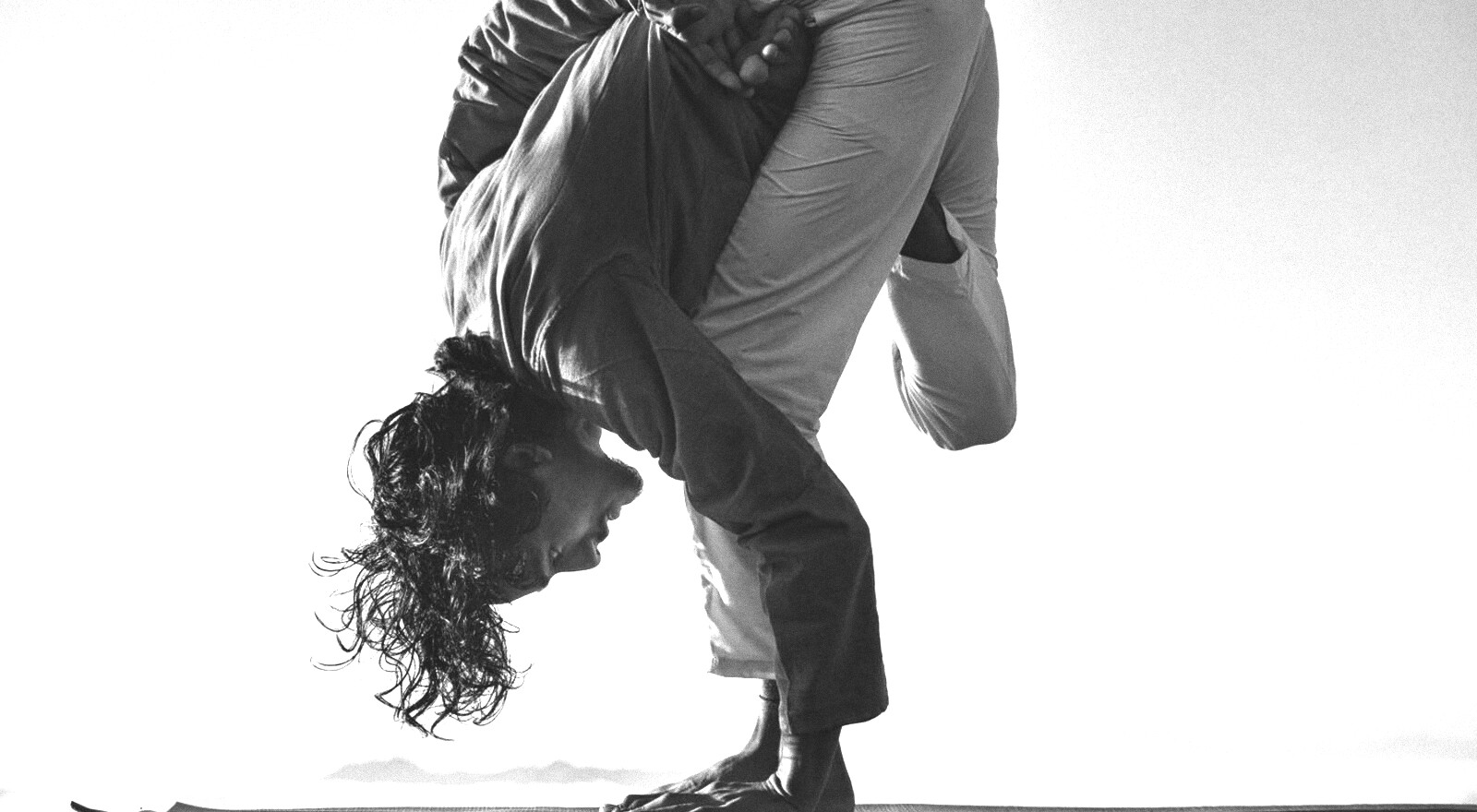
Hatha - Vinyasa es la combinación de las dos formas más conocidas de practicar yoga. Toma la técnica y la calma del Hatha y le suma el movimiento al ritmo de la respiración del Vinyasa. El resultado es una práctica completa y equilibrada: te mueves y fluyes, pero con tiempo suficiente para entender cada postura. Si estás empezando, es una de las mejores puertas de entrada al yoga.
Hatha - Vinyasa brings together the two best-known ways of practicing yoga. It takes the technique and calm of Hatha and adds the breath-led movement of Vinyasa. The result is a complete, balanced practice: you move and flow, but with enough time to really understand each posture. If you're just starting out, it's one of the best doorways into yoga.
¿Qué es el Hatha?
What is Hatha?
Hatha es el yoga de las posturas, la rama más tradicional y la base de casi todo el yoga moderno. La palabra viene del sánscrito ha (sol) y tha (luna): la unión de dos fuerzas opuestas. Se practica despacio — sostienes cada postura varias respiraciones, con atención en la alineación y la respiración. No hay prisa: el objetivo es conocer el cuerpo desde adentro y construir bases sólidas.
Hatha is the yoga of postures, the most traditional branch and the foundation of nearly all modern yoga. The word comes from the Sanskrit ha (sun) and tha (moon): the union of two opposing forces. It's practiced slowly — you hold each posture for several breaths, with attention on alignment and breath. There's no rush: the goal is to know the body from the inside and build a solid foundation.
¿Qué es el Vinyasa?
What is Vinyasa?
Vinyasa significa “colocar de una forma especial”. Viene del sánscrito nyasa (colocar) y vi (de una manera especial): colocar el cuerpo de forma consciente e intencionada, paso a paso. No es moverse por moverse — cada postura se coloca en un orden pensado y se enlaza con la siguiente al ritmo de la respiración, como una secuencia continua que fluye. Cada inhalación y cada exhalación marcan un movimiento. Tiene más dinamismo que el Hatha y genera calor en el cuerpo.
Vinyasa means “to place in a special way.” It comes from the Sanskrit nyasa (to place) and vi (in a special way): placing the body consciously and with intention, step by step. It's not movement for its own sake — each posture is set in a thoughtful order and linked to the next in time with the breath, like one continuous flowing sequence. Every inhale and every exhale marks a movement. It's more dynamic than Hatha and builds heat in the body.
La fusión: Hatha - Vinyasa
The fusion: Hatha - Vinyasa
Esta práctica toma lo mejor de ambos. De la precisión del Hatha, el cuidado en la alineación y la respiración; del Vinyasa, el flujo y la continuidad. Te mueves al ritmo de la respiración, pero sin prisa — ni tan estática que se sienta lenta, ni tan rápida que se pierda la técnica. Un equilibrio entre esfuerzo y descanso.
This practice takes the best of both. From Hatha's precision, care in alignment and breath; from Vinyasa, flow and continuity. You move in time with the breath, but without rushing — not so still that it feels slow, not so fast that the technique gets lost. A balance between effort and rest.
La respiración que guía
The breath that guides
Lo que une cada movimiento es la respiración ujjayi: inhalas y exhalas por la nariz con un sonido suave y constante en la garganta, como una ola, que marca el ritmo y mantiene la mente enfocada. A eso se suman los bandhas, activaciones sutiles de los músculos profundos del abdomen y el suelo pélvico que te dan estabilidad y cuidan la espalda. No tienes que dominarlos desde el primer día — se aprenden poco a poco, y son los que vuelven el movimiento firme y fluido a la vez.
What links each movement is ujjayi breathing: you inhale and exhale through the nose with a soft, steady sound in the throat, like a wave, that sets the rhythm and keeps the mind focused. Alongside it are the bandhas, subtle activations of the deep muscles of the abdomen and pelvic floor that give you stability and protect the back. You don't have to master them on day one — they come little by little, and they're what make the movement both firm and fluid.
Un poco de historia
A little history
El Hatha tiene siglos de tradición: sus textos fundacionales, como el Hatha Yoga Pradipika, datan del siglo XV. El Vinyasa es mucho más reciente — nace en el siglo XX de la enseñanza de Tirumalai Krishnamacharya en India, considerado el padre del yoga moderno, y de su alumno Pattabhi Jois. De ahí evolucionó el “flow” que hoy se practica en todo el mundo. Hatha - Vinyasa es la forma en que esos dos linajes se encuentran en una misma clase.
Hatha carries centuries of tradition: its founding texts, like the Hatha Yoga Pradipika, date to the 15th century. Vinyasa is far more recent — it grew in the 20th century from the teaching of Tirumalai Krishnamacharya in India, considered the father of modern yoga, and his student Pattabhi Jois. From there evolved the “flow” practiced all over the world today. Hatha - Vinyasa is the way those two lineages meet in a single class.
Qué trabajas
What you work on
- Fuerza y tono de todo el cuerpo
- Full-body strength and tone
- Flexibilidad y movilidad
- Flexibility and mobility
- Equilibrio y coordinación
- Balance and coordination
- Respiración consciente
- Conscious breathing
- Concentración y presencia
- Focus and presence
Beneficios
Benefits
- Reduce el estrés y calma el sistema nervioso
- Eases stress and calms the nervous system
- Mejora la postura y alivia la tensión acumulada
- Improves posture and releases built-up tension
- Aumenta la energía y la claridad mental
- Boosts energy and mental clarity
- Desarrolla fuerza y flexibilidad de forma pareja
- Builds strength and flexibility evenly
- Te enseña a respirar mejor
- Teaches you to breathe better
Ha, el sol. Tha, la luna.
El yoga es el arte de equilibrar los opuestos.
Ha, the sun. Tha, the moon.
Yoga is the art of balancing opposites.
La filosofía
The philosophy
Detrás de las posturas hay una idea simple: equilibrar fuerzas opuestas — esfuerzo y descanso, fuerza y suavidad, sol y luna. Ese equilibrio no se queda en el tapete; es una manera de habitar el cuerpo y la vida con más presencia.
Behind the postures lies a simple idea: balancing opposing forces — effort and rest, strength and softness, sun and moon. That balance doesn't stay on the mat; it's a way of inhabiting the body and life with more presence.
¿Para quién es?
Who is it for?
Para todos los niveles. Si nunca has practicado, aquí aprendes las bases con calma y sin presión. Si ya tienes experiencia, encuentras profundidad en el detalle de cada postura. Es un excelente punto de partida — y también un lugar al que siempre vale la pena volver.
For every level. If you've never practiced, here you learn the basics calmly and without pressure. If you already have experience, you'll find depth in the detail of each posture. It's a wonderful starting point — and also a place that's always worth coming back to.